Explorers, merchants, scholars, trail walkers. The past is full of figures who embarked on journeys, crossing countries and continents on foot. Today, with a modern perspective, tourists from all over the world undertake those same journeys, often retracing ancient routes, sometimes creating new ones, and shaping new axes of development, including economic growth. In short, a great opportunity for businesses located along cultural routes—but also a challenge. Here are three key insights drawn from major demand trends.
This is why the DETOUR project, launched on November 1, 2024, and funded by the European Union with a total budget of 2 million euros over three years, focuses on supporting SMEs along four pilot cultural routes to help them enhance their business skills. From the fascinating Sultan’s Trail in Bulgaria to the mountainous trails of Mount Olympus in Greece—still waiting to be discovered—from the historic Via Francigena in Italy to the scenic Lycian Way in Turkey.
It’s easy to see why Europe is investing in routes as a driver of economic growth: hiking tourism is one of the most successful outdoor activities, and the future looks bright. Data and research confirm it: walking along themed routes, trekking trails, and bike excursions are expected to see a 20% increase in tourists each year, with an economic impact rising from $325 billion (in 2022) to $2 trillion by 2032. (Adventure Tourism Market Research, 2024).
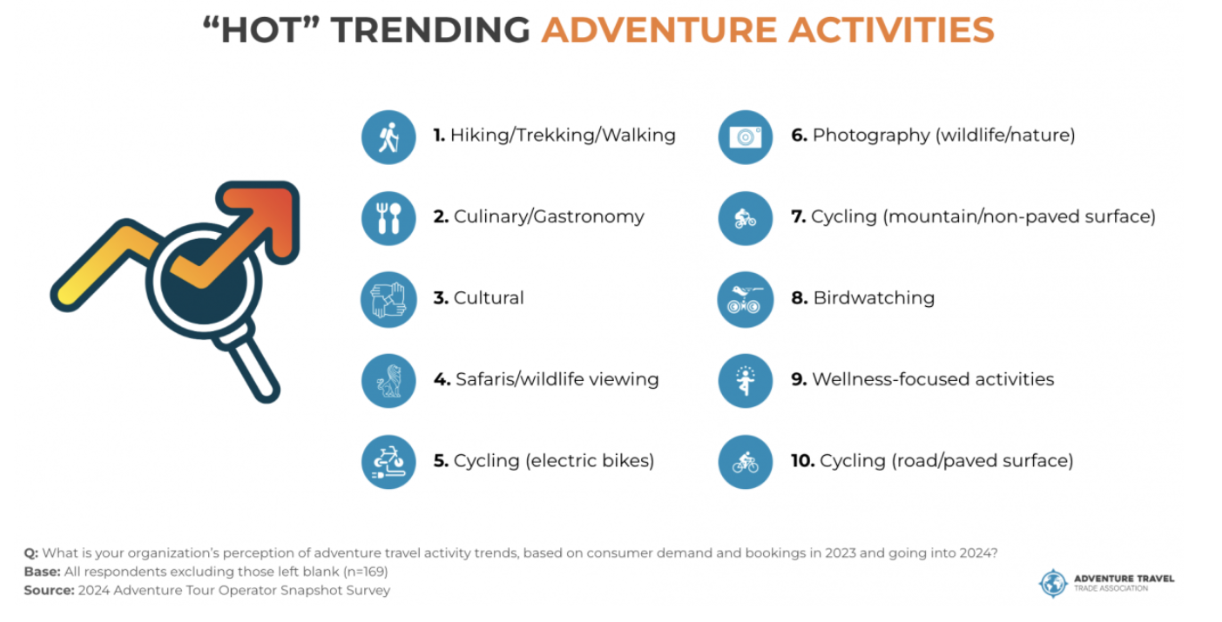
While hiking, trekking, and walking are the most popular activities, the demand for local gastronomy and cultural experiences is also growing, enriching outdoor adventures even further. (Adventure Travel Trade Association, 2024).
Understand the needs and preferences of your walking guests: Did you know that in 50% of cases, they are women, often traveling in groups of friends or solo? Women’s walking communities are growing, and they love being welcomed by female entrepreneurs! Here’s an example from Italy, along the Cammino Minerario di Santa Barbara.
See walking routes as an opportunity to specialize your services: Many routes can also be explored by bike, and cycling tourism is booming! A bike storage area, a charging station for e-bikes, and a small first-aid station are just a few examples of services you could offer. Here are some bike-friendly services along the Rota Vicentina in Portugal: https://rotavicentina.com/en/bike-friendly-services/
Hikers want to learn everything about the places they visit: Introduce them to local products, collect stories from your town, and share them with your guests. Word of mouth—both offline and digital—is still the most powerful marketing tool. Offer cooking experiences and recommend local artisan shops. Here’s an example along the Lycian Way in Turkey. https://middleearthtravel.com/tours/destinations/lycian-way/44066374-a-trek-back-in-time
A cultural route does more than just connect a starting point and a destination—it connects people, especially in rural areas, which cover about 83% of Europe’s territory and preserve the most authentic aspects of local culture.





Write a comment: